
If you have spent any time reading about healthier cooking oils lately, you have almost certainly run into both terms — cold pressed and wood pressed. They show up on bottles, in Instagram posts, in health food stores, and in WhatsApp family groups where someone is sharing an article about why refined oil is terrible. And somewhere in that flood of information, the question that probably occurred to you is the same one that occurs to most people: what is the actual difference between cold pressed oil vs wood pressed oil — and does it even matter which one I choose?
The honest answer is that it matters — but perhaps not in the way most marketing wants you to believe. The cold pressed oil vs wood pressed oil debate is less about one being dramatically superior to the other and more about understanding what each term actually means, where the genuine differences lie, and how to make a smart purchasing decision without being confused by labels that the industry has made deliberately complicated.
We sell cold pressed oil at Alvar Fresh — and we are going to be completely transparent about that as we walk through this comparison. We think the honest case for cold pressed oil is strong enough to make without exaggerating, and we would rather you understand exactly what you are buying and why than have you confused by buzzwords.
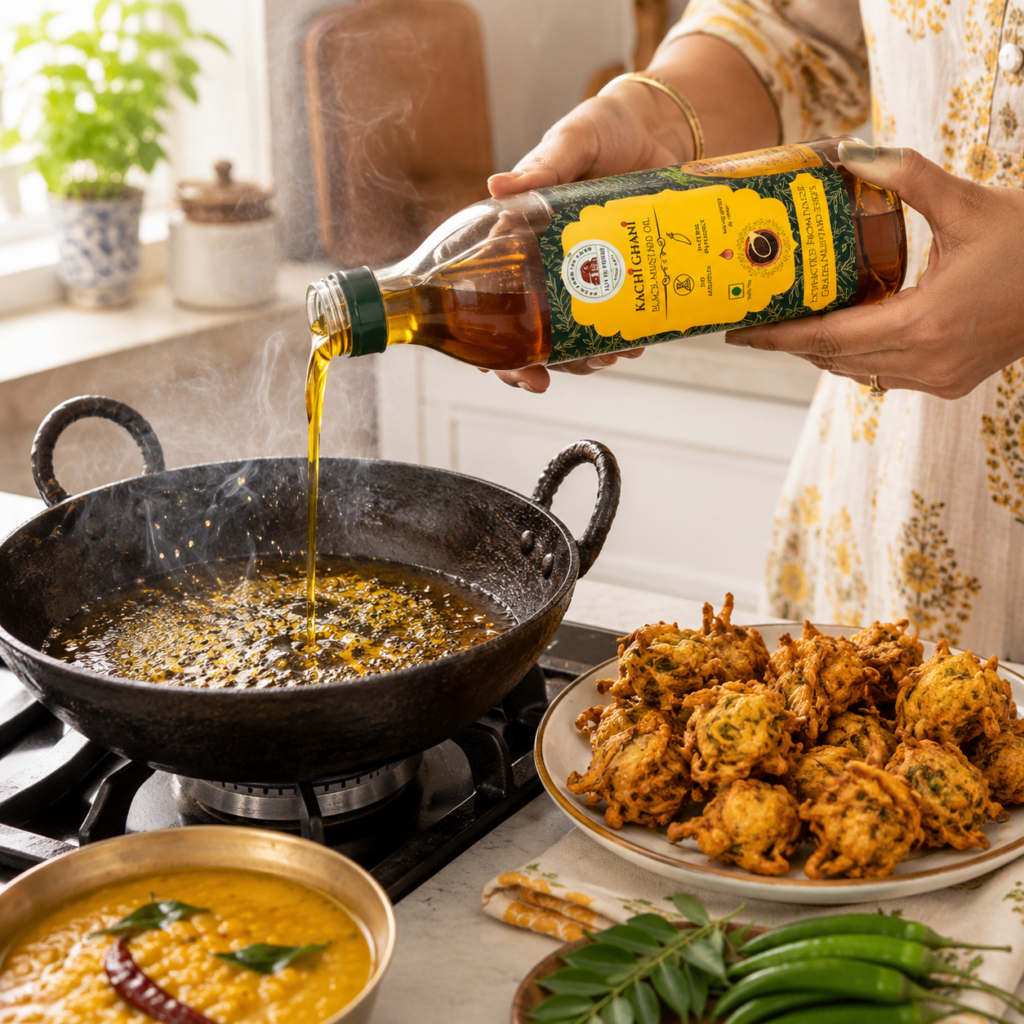
“Cold pressed oil vs wood pressed oil is less a competition and more a conversation about process, temperature and what survives the journey from seed to bottle. Once you understand that, the choice becomes clear.”
Cold Pressed Oil vs Wood Pressed Oil — What Do These Terms Actually Mean?
Before comparing the two, we need to establish what each term actually refers to — because there is more overlap than most people realise, and the distinction matters for making a genuinely informed decision.
Cold pressed oil vs wood pressed oil is not a comparison between two completely different processes. It is a comparison between a modern standardised term and a traditional Indian one — both describing mechanical extraction without chemical solvents, but with a specific technical difference in how temperature is managed.
What Cold Pressed Oil Means
Cold pressed oil is oil extracted from seeds or nuts using purely mechanical pressure — no chemical solvents, no hexane, no refining — at a temperature that is kept below a specific threshold. The internationally recognised standard is typically below 49°C throughout the entire extraction process. This temperature limit is what makes cold pressing nutritionally valuable: it keeps the heat-sensitive compounds — vitamins, antioxidants, essential fatty acids — intact in the final oil. In the cold pressed oil vs wood pressed oil comparison, cold pressing is the more technically defined term with a specific temperature standard attached to it.
What Wood Pressed Oil Means
Wood pressed oil — also known as kachi ghani oil or chekku oil in South India — is oil extracted using a traditional wooden press called a ghani, powered by bullocks or an electric motor. The wooden ghani rotates slowly, which naturally generates minimal heat through friction. Because the process is slow and mechanical, the oil retains much of its nutritional integrity without any deliberate temperature control system — the low heat is a consequence of slow rotation rather than an engineered specification.
In the cold pressed oil vs wood pressed oil debate, this is the key practical difference: cold pressing uses modern machinery with temperature monitoring to guarantee the oil stays below 49°C. Wood pressing relies on the inherent slowness of the traditional ghani to keep temperatures naturally low — but without a guaranteed temperature ceiling. In practice, a well-operated wood press keeps temperatures well within acceptable ranges. But the temperature is a consequence of the process rather than a controlled specification.
The one-line summary of cold pressed oil vs wood pressed oil
Cold pressing is the modern, technically specified version of low-temperature mechanical extraction. Wood pressing is the traditional Indian version of the same principle. Both are vastly superior to refined oil. The cold pressed oil vs wood pressed oil difference is one of specification and consistency rather than a fundamental nutritional divergence.
Which Is Better — Cold Pressed or Wood Pressed Oil?
This is the core question in any cold pressed oil vs wood pressed oil comparison — and the answer is nuanced enough that a simple one-word verdict would not serve you well. Let us go through the specific dimensions where one or the other holds an advantage.
Nutritional Retention — Advantage Cold Pressed
Because cold pressing uses temperature-controlled machinery with a guaranteed ceiling below 49°C, the nutritional retention is more consistent batch to batch than wood pressing. In the cold pressed oil vs wood pressed oil comparison, cold pressing wins on reliability of nutritional preservation — not because wood pressed oil is nutritionally poor, but because the temperature consistency is engineered rather than estimated.
A well-operated wood press at low speed will produce oil with nutritional quality comparable to cold pressed. But a wood press running too fast, or one where the friction heat builds up during extended operation, can exceed the temperature at which some heat-sensitive compounds begin to degrade. Cold pressing, with its monitored temperature control, removes that variability entirely.
Authenticity and Tradition — Advantage Wood Pressed
In the cold pressed oil vs wood pressed oil comparison from a cultural and traditional standpoint, wood pressed oil carries something that no modern machine can replicate — centuries of practice, community knowledge, and the specific character that comes from slow wooden ghani extraction. In many parts of India, local chekku mills are the most trusted source of cooking oil because people have watched the process happen in front of them for generations.
The flavor of wood pressed oil also tends to be slightly more pronounced than cold pressed oil from the same seed — because the slower, more intimate contact between the wood and the seed during pressing extracts more of the volatile aromatic compounds. In the cold pressed oil vs wood pressed oil taste comparison, wood pressed oil often wins on depth and character.
Consistency and Scalability — Advantage Cold Pressed
For brands producing at any meaningful scale, consistent cold pressing with temperature-monitored machinery is simply more reliable than wood pressing. The cold pressed oil vs wood pressed oil comparison from a production standpoint favors cold pressing for consistency — every batch maintains the same temperature profile, the same extraction conditions, and therefore the same nutritional and flavor standards. This is why brands that sell cold pressed oil can more reliably guarantee what is in the bottle across multiple batches.
The Verification Problem
One practical issue in the cold pressed oil vs wood pressed oil market is that both terms are increasingly being used by brands that do not fully live up to them. “Wood pressed” labels have started appearing on oils that were pressed at higher temperatures or partially refined. “Cold pressed” labels appear on oils extracted at temperatures higher than the standard. The safest approach — regardless of which term a brand uses — is to ask about the extraction temperature and whether any refining steps occurred after pressing.
📖 Related read
Is Ghee Good for Health? Here Is What Nobody Is Telling You Honestly
If you are rethinking your kitchen fats broadly, this post covers what ghee does for your health — and why cold pressed oil and ghee work best as complements in the same kitchen.
From Alvar Fresh
Cold Pressed Oil — Made the Way It Should Be
-
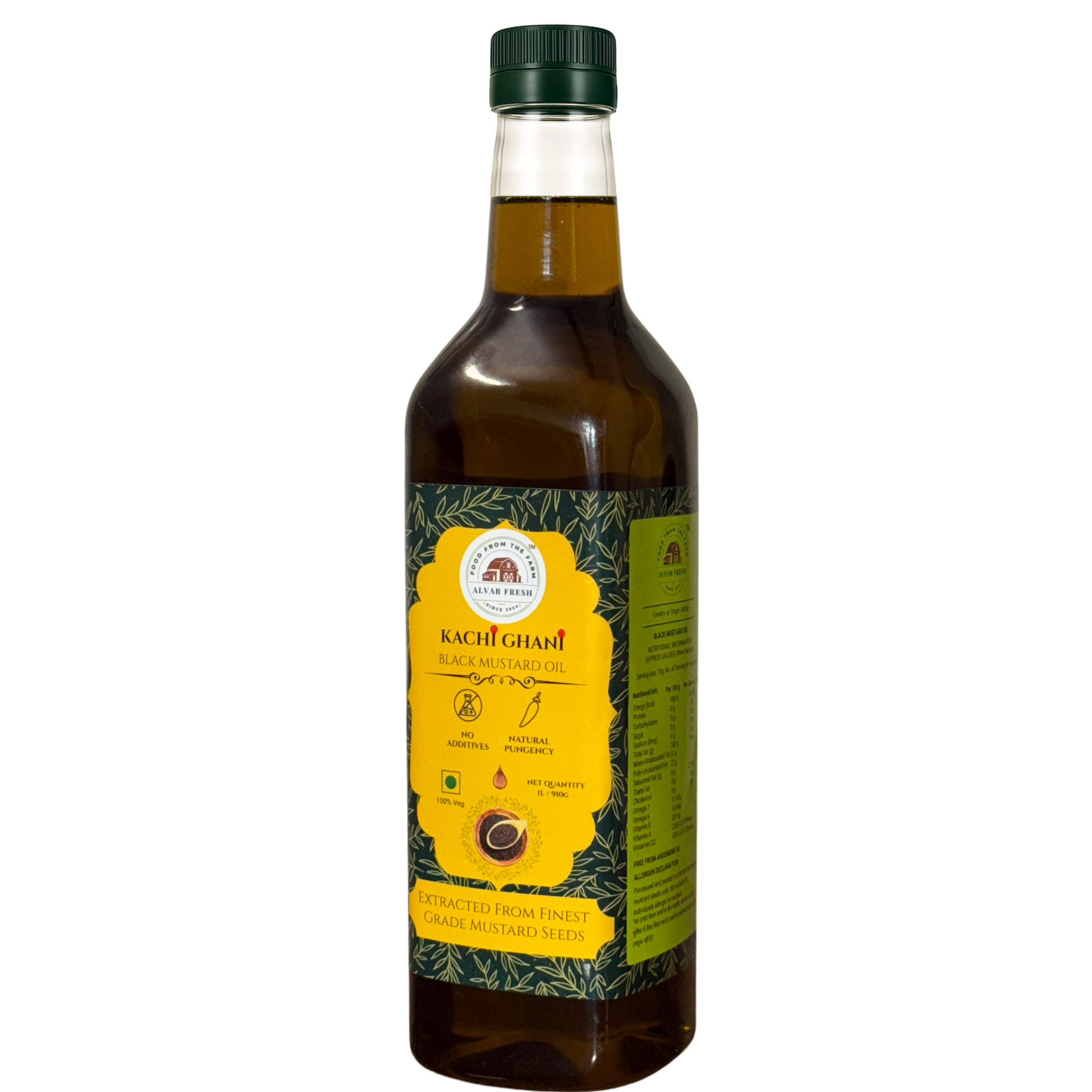
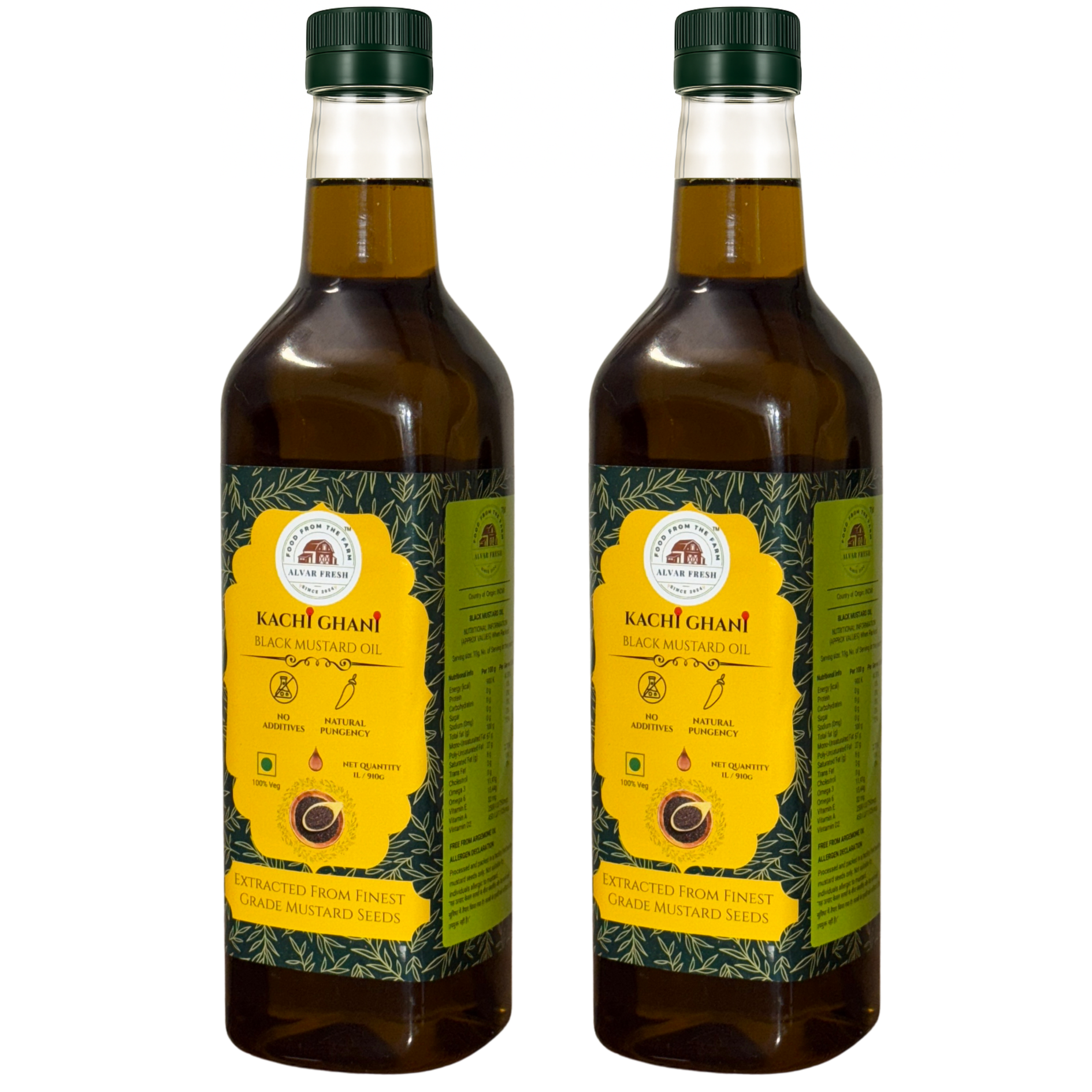
Alvar Fresh Kachi Ghani Mustard Oil 1L
Original price was: ₹299.00.₹275.00Current price is: ₹275.00. -
Alvar Fresh Kachi Ghani Mustard Oil 500ML
Original price was: ₹170.00.₹165.00Current price is: ₹165.00. -
Alvar Fresh Kachi Ghani Mustard Oil 2L
Original price was: ₹599.00.₹560.00Current price is: ₹560.00.
What Are the Disadvantages of Cold Pressed Oils?
We sell cold pressed oil — so it would be easy to gloss over this question. But we would rather give you an honest answer, because understanding the real limitations of cold pressed oil is what helps you use it correctly rather than expecting it to do things it was not designed for. The cold pressed oil vs wood pressed oil debate should include an honest account of where both fall short.
The Smoke Point Limitation
This is the most practically significant disadvantage of cold pressed oils — and it applies to wood pressed oils equally. Because cold pressed oil retains its natural compounds without the refining that raises smoke points, most cold pressed oils smoke at lower temperatures than their refined counterparts. Cold pressed flaxseed oil should not be heated at all. Cold pressed extra virgin olive oil smokes around 160-190°C. Even cold pressed groundnut oil, which has a relatively higher smoke point, is not suitable for the aggressive high-heat cooking that Indian cuisine regularly demands.
In the cold pressed oil vs wood pressed oil comparison, both face this same limitation. Neither is designed for deep frying or high-flame tadkas where temperatures can easily exceed 200°C. Using cold pressed or wood pressed oil beyond its smoke point destroys the very compounds that make it worth buying — which is why pairing it with a high-stability fat like ghee for high-heat cooking is the most sensible kitchen strategy.
Shorter Shelf Life
Cold pressed oil retains its natural unsaturated fatty acids without the antioxidant stabilisers that refining adds — which means it is more susceptible to oxidation and going rancid. This is not a flaw in the product — it is a consequence of being genuinely natural. But it does require storing cold pressed oil in dark glass bottles away from heat and light, and using it within a reasonable time after opening. In the cold pressed oil vs wood pressed oil comparison, wood pressed oil faces exactly the same shelf life considerations.
Higher Price for Lower Volume
Cold pressing yields less oil per kilogram of seeds than chemical solvent extraction — sometimes significantly less. This lower yield directly translates to a higher price per litre. In the cold pressed oil vs wood pressed oil comparison, both tend to cost more than refined oil for this same reason. The price premium is real and justified — but it means cold pressed and wood pressed oils are best used for the applications where their nutritional advantage is actually preserved. Using them for high-heat cooking — where that advantage is destroyed — is wasteful in both nutritional and financial terms.
The honest disadvantage summary
Cold pressed oil and wood pressed oil share the same limitations: lower smoke points, shorter shelf life, and higher price than refined oil. None of these are reasons to avoid them — they are reasons to use them correctly. For raw applications, low-heat cooking, and finishing: cold pressed or wood pressed oil. For high-heat Indian cooking: ghee. The cold pressed oil vs wood pressed oil debate becomes much simpler once you accept that no single fat does everything perfectly.
The Adulteration Risk — Both Face It
As demand for cold pressed and wood pressed oils has grown, so has the number of brands cutting corners. In the cold pressed oil vs wood pressed oil market, adulteration — blending with cheaper refined oils, pressing at higher temperatures than claimed, partial refining after extraction — is a real problem. The safest protection is asking brands about their extraction temperature, whether any post-extraction processing occurs, and what the oil looks, smells, and tastes like compared to the source ingredient it came from.
Red flags in both cold pressed and wood pressed oil
Unusually pale color for the seed type · Neutral smell with no character · Suspiciously long shelf life · Very low price for claimed quality · Brand cannot state extraction temperature · Any refining steps mentioned after pressing
Which Is the Healthiest Type of Oil — Where Do Cold and Wood Pressed Fit?
In the broader cold pressed oil vs wood pressed oil context, it helps to understand where unrefined oils sit in the overall hierarchy of cooking fats — because “healthiest” depends on what you are using the oil for and what your specific health priorities are.
For Raw Use and Low-Heat Cooking
For salad dressings, marinades, low-heat sautéing, and finishing drizzles, cold pressed and wood pressed oils are genuinely among the healthiest choices available. They retain their natural antioxidants, vitamins, and essential fatty acids in a form the body can actually use. In the cold pressed oil vs wood pressed oil comparison for these applications, both are excellent — with cold pressed winning slightly on reliability of nutritional content.
For High-Heat Indian Cooking
Here the cold pressed oil vs wood pressed oil comparison becomes less relevant — because neither is the ideal choice. High-heat Indian cooking — deep frying, aggressive tadkas, high-flame sautéing — requires a fat with a smoke point above 200°C that remains stable under sustained heat. Most cold pressed and wood pressed oils cannot reliably meet this requirement without breaking down.
The traditional answer to this in Indian cooking was always ghee — which has a smoke point of approximately 250°C, remains stable under high heat because it contains no water or milk solids, and adds genuine nutritional value through its butyric acid and fat-soluble vitamin content. The combination of cold pressed oil for raw and low-heat applications plus ghee for high-heat cooking is the most nutritionally complete kitchen fat strategy available.
🔍 Also worth reading
The Bilona Method: The Ancient Ghee-Making Process That Changes Everything
If cold pressed oil and ghee are the two pillars of a smart Indian kitchen, understanding how genuine ghee is made is just as important as understanding the oil pressing process.
Which Cooking Oil Is Best for Hypertension?
This is a health-specific question that deserves a careful answer in the cold pressed oil vs wood pressed oil context — because both are often marketed with cardiovascular health claims, and people managing blood pressure deserve accurate information rather than general wellness enthusiasm.
What the Research Points Toward
For people managing hypertension, the general nutritional consensus points toward oils with a favorable omega-3 to omega-6 ratio, high monounsaturated fatty acid content, and natural antioxidant compounds — all of which are better preserved in cold pressed and wood pressed oils than in refined alternatives. In the cold pressed oil vs wood pressed oil comparison for hypertension specifically, cold pressed olive oil has the strongest research base — the Mediterranean diet literature consistently supports its use for cardiovascular health management.
Cold pressed mustard oil also has a strong research case in the Indian context — its omega fatty acid ratio is among the most favorable of any cooking oil, and population studies in mustard oil-consuming regions of India have shown interesting cardiovascular outcomes. Cold pressed sesame oil contains sesamol and sesamolin — compounds with documented antioxidant and mild antihypertensive properties in research settings.
What to Avoid If You Have Hypertension
Refined vegetable oils — particularly those high in omega-6 fatty acids like refined sunflower, soybean, and corn oil — consumed in large amounts have been associated with increased inflammatory markers, which is counterproductive for cardiovascular health management. The cold pressed oil vs wood pressed oil comparison for hypertension essentially becomes a comparison of either over refined oil — and both cold pressed and wood pressed options are preferable from a cardiovascular perspective for raw and low-heat cooking applications.
A Note of Caution
Individual cardiovascular conditions vary significantly — what works well for one person’s blood pressure management may not be appropriate for another. The cold pressed oil vs wood pressed oil comparison can inform your general direction, but anyone managing diagnosed hypertension should discuss dietary fat choices with their doctor or a registered dietitian rather than relying solely on general nutritional guidance.
Best cold pressed oils for cardiovascular health — general guidance
Cold pressed olive oil — strongest research base for heart health · Cold pressed mustard oil — favorable omega ratio for Indian cooking · Cold pressed sesame oil — sesamol and sesamolin antioxidant properties · Cold pressed flaxseed oil — highest Omega-3 content, raw use only · All paired with ghee for high-heat cooking where these oils cannot go
Cold Pressed Oil vs Wood Pressed Oil — Making the Right Choice for Your Kitchen
After going through the full cold pressed oil vs wood pressed oil comparison, the practical question is: what should you actually do with this information when you are standing in a store or browsing online?
When to Choose Cold Pressed Oil
Choose cold pressed oil when you want guaranteed temperature-controlled extraction with consistent nutritional standards across batches. If you are buying from a brand rather than a local mill — where you cannot watch the process yourself — cold pressed oil gives you more verifiable quality assurance. In the cold pressed oil vs wood pressed oil comparison for packaged retail products, cold pressing is more reliably what it claims to be because the specification is more precisely defined and more easily tested.
When Wood Pressed Oil Makes Sense
Wood pressed oil makes most sense when you have direct access to a local ghani mill where you can verify the process yourself, or when you specifically want the traditional character and flavor that wood pressing produces. If you live near a reliable chekku or ghani mill with a good reputation, wood pressed oil from that source is likely to be excellent quality at a fair price. The cold pressed oil vs wood pressed oil comparison tips toward wood pressed when local trust and traceability replace the need for a standardised specification.
The Smart Indian Kitchen Strategy
The most nutritionally intelligent approach — whether you choose cold pressed or wood pressed — is to use unrefined oil for the applications where it adds value, and ghee for the applications where it handles conditions that unrefined oil cannot. In the cold pressed oil vs wood pressed oil kitchen strategy, the oil goes into salad dressings, marinades, low-heat cooking, and finishing. The ghee goes into the tadka, the frying, the halwa, and any cooking that demands sustained high heat. This is not a complicated system — it is simply the traditional Indian kitchen, restored.
Final Thoughts
The cold pressed oil vs wood pressed oil debate is ultimately less divisive than the marketing around it suggests. Both are mechanically extracted without chemical solvents. Both retain significantly more nutritional value than refined oil. Both are better choices than the industrial cooking oils that dominate most Indian kitchens today. The cold pressed oil vs wood pressed oil difference comes down to specification precision and consistency — cold pressing offers a tighter, more verifiable temperature standard; wood pressing offers tradition, local trust, and often a more pronounced flavor character.
Neither is perfect for every application. That is why the smartest kitchen does not treat the cold pressed oil vs wood pressed oil question as the only fat decision it needs to make. Cold pressed or wood pressed oil for the applications where their nutritional compounds are preserved and can do their work. Ghee — genuinely made, from a genuinely good source — for the applications that demand high heat stability and the specific nutritional profile that only clarified dairy fat can provide. Together, they cover everything your kitchen needs.
At Alvar Fresh, we make cold pressed oil and traditional ghee — because we believe a complete kitchen deserves both sides of that equation done properly. No shortcuts on either. No compromises on quality. That is the only standard worth holding.