If you’ve been hearing the term a2 desi cow ghee everywhere lately and wondering what the fuss is really about — you’re not alone. Walk into any health store or scroll through any wellness feed, and you’ll see it claimed as everything from a heart-healthy fat to an ancient immunity booster. But what separates genuine ghee from a true desi source from the hundreds of ordinary products lining supermarket shelves?
This guide cuts through the noise. By the end, you’ll know exactly what it is, why it matters, how it’s made, and — most importantly — how to tell if you’re actually buying the real thing.
What Is A2 Desi Cow Ghee, Really?
At its core, a2 desi cow ghee is clarified butter made exclusively from the milk of indigenous Indian (desi) cow breeds — such as Gir, Sahiwal, Tharparkar, and Rathi — whose milk naturally contains only the A2 beta-casein protein.
Here’s why that matters.
Cow milk contains a protein called beta-casein, which comes in two forms: A1 and A2. Most hybrid and crossbred cows bred for high milk yield — like Holstein-Friesian — produce A1 milk. Indigenous desi breeds, on the other hand, have always produced A2 milk. The difference isn’t just academic. A1 beta-casein breaks down in your gut into a compound called BCM-7 (beta-casomorphin-7), which several researchers have linked to digestive discomfort, inflammation, and other metabolic issues. A2 beta-casein does not produce BCM-7, making it far gentler on the digestive system.
So when you choose a2 desi cow ghee, you’re not just choosing a cooking fat — you’re choosing milk that aligns more closely with what the human body has been digesting for thousands of years.
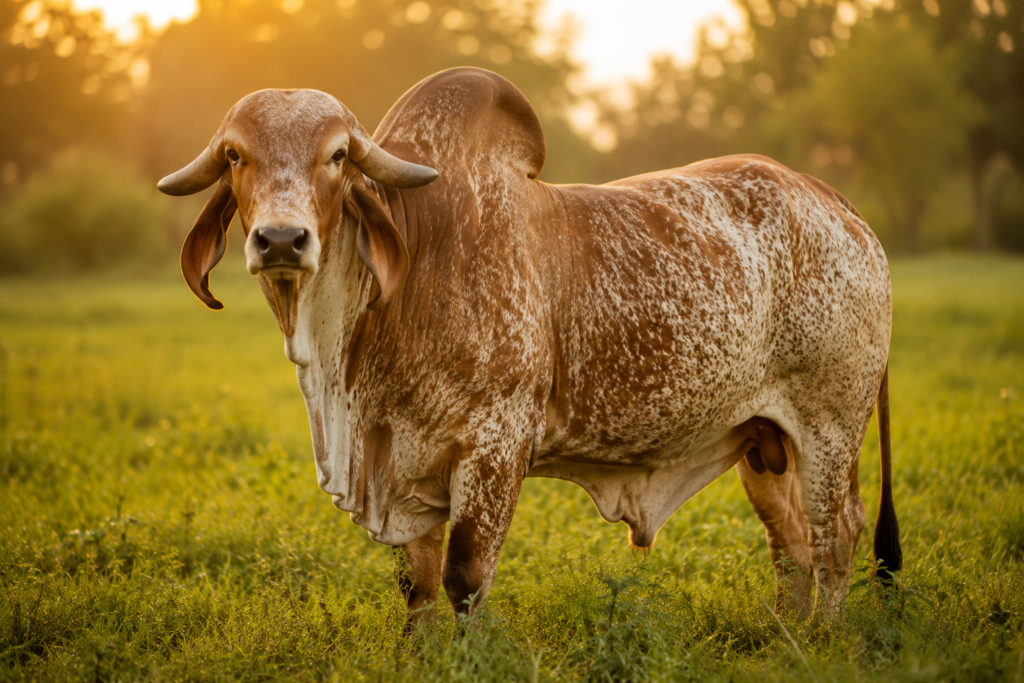
Want to understand why the breed of the cow matters so much? Read our deep dive: A2 Gir Cow Ghee Benefits: Why This Ancient Breed Produces India’s Finest Ghee
Is A2 Desi Cow Ghee Healthier Than Regular Ghee?
This is the question most people ask — and the honest answer is: it depends on what you mean by “regular ghee.”
If regular ghee is made from A1 crossbred cow milk using industrial processing methods, then yes — a2 desi cow ghee holds a clear nutritional edge. Here’s a practical breakdown:
The golden colour of authentic a2 desi cow ghee is not cosmetic — it comes from beta-carotene, a precursor to Vitamin A, which is naturally higher in the milk of grass-fed desi cows.
Recommended products
-
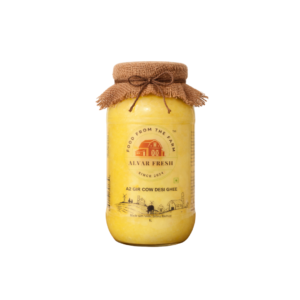
Alvar Fresh Bilona Desi Ghee – 1L
Original price was: ₹1,950.00.₹1,650.00Current price is: ₹1,650.00. -
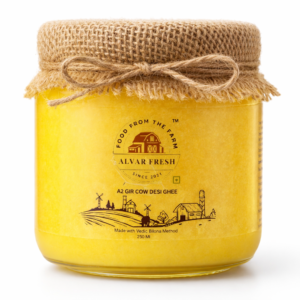
Alvar Fresh Bilona Desi Ghee – 250 ML
Original price was: ₹699.00.₹450.00Current price is: ₹450.00. -
Alvar Fresh Bilona Desi Ghee – 2L
Original price was: ₹3,850.00.₹3,750.00Current price is: ₹3,750.00. -
Alvar Fresh Bilona Desi Ghee – 500 ML
Original price was: ₹1,100.00.₹840.00Current price is: ₹840.00.
How Is Authentic A2 Desi Cow Ghee Made?
This is where most brands quietly skip important details.
Authentic a2 desi cow ghee is traditionally made using the Bilona method — an ancient churning process that begins with whole A2 milk, not cream. The process goes like this:
- Fresh A2 milk from desi cows is collected and boiled
- It is cultured overnight to make curd (dahi)
- The curd is hand-churned using a wooden churner (bilona) to extract makhan (butter)
- The makhan is then slow-cooked on a low flame to produce pure ghee
This is the opposite of how commercial ghee is made, where cream is mechanically separated from milk and directly converted to ghee — skipping the curd and churning stage entirely. That shortcut strips away probiotic benefits and significantly reduces the nutritional richness of the final product.
The Bilona method is a world of its own. We’ve covered it in full detail here: The Bilona Method: The Ancient Ghee-Making Process That Changes Everything
When you buy a2 desi cow ghee made through the bilona process, you’re getting a product that took roughly 25–30 litres of A2 milk to produce just one litre of ghee. That’s why genuine bilona ghee costs more — and why it should.
Can A2 Desi Cow Ghee Help Reduce Inflammation?
Inflammation is at the root of most modern lifestyle diseases — joint pain, gut issues, skin disorders, even cardiovascular problems. And here’s where a2 desi cow ghee has something genuinely interesting to offer.
Butyric acid is a short-chain fatty acid present in high concentrations in quality ghee of this type. It is one of the primary fuel sources for the cells lining your colon, and research increasingly points to its role in reducing gut inflammation, supporting the intestinal barrier, and improving overall digestive health.
Additionally, a2 desi cow ghee from grass-fed desi cows contains:
- Conjugated Linoleic Acid (CLA) — shown to have anti-inflammatory properties and support healthy body composition
- Omega-3 fatty acids — well-established anti-inflammatory agents
- Fat-soluble vitamins (A, D, E, K2) — critical for immune regulation and cellular repair
It’s worth noting that the absence of A1 beta-casein — and therefore BCM-7 — also removes a known trigger of gut inflammation for many people. Those who have struggled with bloating, sluggish digestion, or sensitivity to dairy often report feeling significantly better when they switch to this ghee.
Is ghee actually good for you? We break it down without the marketing fluff here: Is Ghee Good for Health? Here Is What Nobody Is Telling You Honestly
Recommended products
-
Alvar Fresh Bilona Desi Ghee – 1L
Original price was: ₹1,950.00.₹1,650.00Current price is: ₹1,650.00. -
Alvar Fresh Bilona Desi Ghee – 250 ML
Original price was: ₹699.00.₹450.00Current price is: ₹450.00. -
Alvar Fresh Bilona Desi Ghee – 500 ML
Original price was: ₹1,100.00.₹840.00Current price is: ₹840.00. -
Alvar Fresh Bilona Desi Ghee – 2L
Original price was: ₹3,850.00.₹3,750.00Current price is: ₹3,750.00.
Which Is Better — A1 or A2 Desi Cow Ghee?
Let’s be direct: a2 desi cow ghee wins — not because of marketing, but because of origin and process.
A1 ghee comes from crossbred cows that were specifically engineered for high milk output. The focus was volume, not nutritional quality. These cows are typically raised in confined conditions, fed grain-heavy diets, and the milk they produce is fundamentally different in protein structure.
A2 desi cow ghee comes from breeds that have grazed freely on Indian soil for centuries. Their milk is lower in volume but far richer in nutritional complexity — more CLA, more butyric acid, more fat-soluble vitamins, and only the A2 beta-casein protein your body handles well.
If you’ve ever wondered why ghee from your grandmother’s kitchen tasted so different from the packaged ghee in stores — the cow and the method are almost certainly why.
Still unsure about what to actually check on a ghee label? Read: Pure Desi Ghee: How to Identify, Choose and Never Get Fooled Again
How to Know If Your A2 Desi Cow Ghee Is Genuine
This part matters most — because the market is flooded with products labelled “A2” or “desi” that are neither.
Here’s what to actually look for:
Colour: Genuine a2 desi cow ghee from grass-fed cows is golden to deep yellow. If it’s white or very pale, that’s a red flag.
Texture: At room temperature, it should be semi-solid with a slightly grainy texture — not perfectly smooth like commercial ghee. The granular texture is a sign of natural fat crystallisation.
Aroma: It should have a rich, nutty, slightly earthy smell. Overly bland or neutral-smelling ghee has usually been over-processed.
Transparency: A brand selling authentic a2 desi cow ghee should be able to tell you the breed of cow, where the cows are raised, and whether the bilona method was used.
Price: One litre of honest bilona-made ghee requires a large volume of A2 milk and significant labour. If the price looks like regular commercial ghee, it almost certainly is.
Want to go deeper on spotting fakes and finding the best ghee in India? Check out: The Best Ghee in India: What to Actually Look For Beyond the Label and A2 Cow Ghee: What Nobody Actually Tells You Before You Buy
Conclusion: Why A2 Desi Cow Ghee Is Worth the Upgrade
Not every health trend deserves your attention. But a2 desi cow ghee is different — it isn’t a new discovery. It’s a return to something India has known for thousands of years, now backed by a growing body of nutritional science.
If you’ve been using refined oils, commercial ghee, or anything that doesn’t trace back to a named desi breed and a traditional process, you’ve simply been making do. Authentic a2 desi cow ghee — made from the milk of indigenous cows, churned the old way, slow-cooked with care — is richer in every way that matters.
Your food is only as good as what goes into it. And when it comes to cooking fat, this is, by almost every measure, the best choice available in an Indian kitchen.
At Alvar Fresh, we believe you deserve to know exactly what’s in your ghee — and exactly how it was made. Our ghee comes from certified Gir cows, made using the traditional bilona method, with no shortcuts and nothing hidden.
[Explore Alvar Fresh A2 Desi Cow Ghee → alvarfresh.com]
Related Reading:
- A2 Gir Cow Ghee Benefits: Why This Ancient Breed Produces India’s Finest Ghee
- The Bilona Method: The Ancient Ghee-Making Process That Changes Everything
- Pure Desi Ghee: How to Identify, Choose and Never Get Fooled Again
- A2 Cow Ghee: What Nobody Actually Tells You Before You Buy
- The Best Ghee in India: What to Actually Look For Beyond the Label
- Is Ghee Good for Health? Here Is What Nobody Is Telling You Honestly