
A few months ago, a customer messaged us with a question that stopped me in my tracks. She had been buying a popular brand of A2 ghee for over a year — paying a premium for it, feeling good about the choice — and then someone told her to check whether the milk actually came from an indigenous Indian breed. She asked the brand. They did not reply. She asked again. Still nothing.
That silence told her everything. And it made her start asking the question that more people should be asking before they spend their money: what actually makes the best A2 cow ghee in India, and how do you know when you have found it?
Finding the best A2 cow ghee in India is not as simple as picking the most expensive jar or the one with the prettiest label. The market has grown fast — and unfortunately, so has the gap between what brands claim and what they actually deliver. This guide is our honest attempt to help you close that gap for good.
“The best A2 cow ghee in India does not need a loud label to prove itself. The breed, the process, and the milk do the talking — and once you know what to look for, you will never be fooled by clever packaging again.”
What Makes the Best A2 Cow Ghee in India Different From Everything Else?
Let us start with the foundation, because this is where most buying decisions go wrong. Not all ghee labeled A2 is actually the best A2 cow ghee in India. In fact, a large portion of what gets sold under that label does not meet the standards that make A2 ghee worth choosing in the first place.
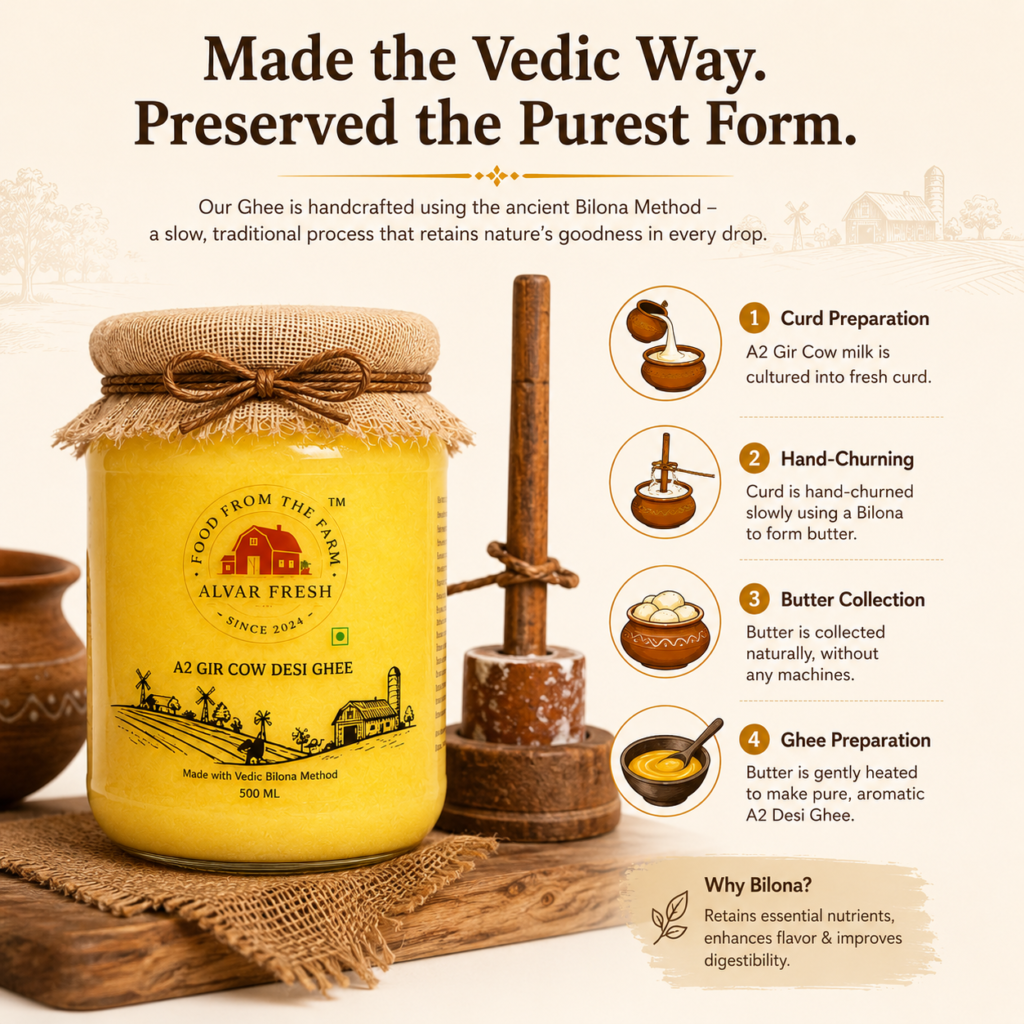
The term A2 refers to a specific type of protein — A2 beta-casein — found naturally in the milk of indigenous Indian cow breeds. When this milk goes through the traditional Bilona process — curd fermentation, hand churning, slow cooking — the result is ghee that is nutritionally dense, easy on the digestive system, and carries that deep golden color that genuine desi ghee is known for. That combination — A2 milk plus traditional processing — is what separates the best A2 cow ghee in India from the rest of the shelf.
Take away either element and you have a product that does not fully deserve the title. A2 milk processed industrially through cream separation gives you a pale shadow of what the real thing should be. Traditional Bilona processing using crossbred cow milk gives you better texture and flavour than mass-produced ghee but misses the protein advantage entirely. The best A2 cow ghee in India needs both — and that is why it is rarer than the market makes it appear.
Why the Bilona Method Cannot Be Skipped
The Bilona process is time-consuming, labour-intensive, and impossible to scale cheaply. Milk is first set into curd and left to ferment overnight. The next morning it is hand-churned using a wooden churner to separate the butter. That butter is then slow-cooked on a low flame until the water evaporates completely and pure ghee remains. The whole process takes the better part of a day for a relatively small yield.
This is not just tradition for tradition’s sake. The curd fermentation step creates a probiotic environment that actually enhances the nutritional quality of the fat. The slow cooking at low heat preserves fat-soluble vitamins that high-heat industrial processing destroys. The flavour — that unmistakable deep, nutty warmth — is a direct product of this method and nothing else. No shortcut produces the same result. And no brand making genuinely the best A2 cow ghee in India will tell you otherwise.
Which A2 Cow Ghee Is Best in India — And How Do You Actually Judge?
This is the question everyone is typing into Google, and most answers give you a brand list without explaining the criteria behind it. That is not useful. Because the best A2 cow ghee in India is not a fixed brand — it is a standard. And once you understand that standard, you can evaluate any brand yourself without needing someone else’s list.
Traceability: The First and Most Important Filter
The brand making the best A2 cow ghee in India can tell you exactly where their milk comes from. Not just “indigenous cows” or “desi breed farms” — but which breed, which region, which type of farming practice. Gir cows from Gujarat. Sahiwal cows from Punjab. Grass-fed, open pasture, small family farms. This level of specificity is not boasting — it is accountability. And it is the clearest signal that the people behind the product actually care about what is in the jar.
Small Batch Versus Industrial Scale
Here is an uncomfortable truth about the ghee market: the best A2 cow ghee in India almost never comes from the brands with the biggest marketing spend. Genuine Bilona processing simply cannot be done at industrial scale without compromising something — usually the method itself. The brands worth trusting tend to be smaller, more direct, and more willing to talk about their process in granular detail because that process is their actual differentiator.
When a brand starts scaling up and their price stays suspiciously low for claimed A2 Bilona quality — that is the moment to start asking harder questions. Good ghee costs what it costs because of what goes into making it. The best A2 cow ghee in India is never the cheapest option on the shelf, and it should not be.
Certifications — Helpful But Not Sufficient
FSSAI certification, organic certification, and lab testing reports are all useful supporting evidence — but none of them alone guarantee you are getting the best A2 cow ghee in India. Certifications tell you a product met a minimum standard at a point in time. They do not tell you about the breed, the farming practice, or whether the Bilona process is genuinely being followed batch by batch. Use certifications as a baseline filter, not as a final verdict.
What actually separates the best from the rest
Named indigenous breed with traceable source · Verified Bilona hand-churning process · Small batch production · Grass-fed open pasture cows · Brand that answers questions directly and in detail · Deep golden color and grainy winter texture in the jar.
📖 Related read
The Best Ghee in India: What to Actually Look For Beyond the Label
A broader guide to evaluating any ghee brand in India — covering the same transparency and process standards that define the best A2 cow ghee in India.
Read the full guide →
Recommended products
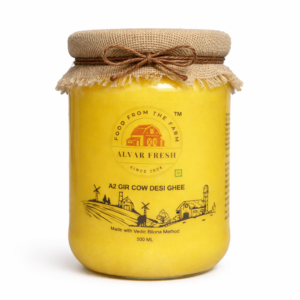
Which Cow Is Best for Ghee in India — And Why It Changes Everything
The breed question is where most buyers lose the plot — because they assume all desi cows are equal when it comes to ghee. They are not. And understanding this difference is essential to understanding what makes the best A2 cow ghee in India worth the price it commands.
India has several indigenous A2 cow breeds, each with its own milk profile, fat content, and nutritional characteristics. All of them produce A2 milk. But not all of them produce milk with the same beta-carotene content, the same fat richness, or the same suitability for high-quality Bilona ghee.
Why the Gir Cow Stands Apart
Among all indigenous Indian breeds, the Gir cow from Gujarat consistently produces milk that is best suited for making the best A2 cow ghee in India. Her milk has a naturally high fat content, a rich beta-carotene profile — which is responsible for that signature golden-yellow color in the final ghee — and a composition that responds particularly well to the Bilona process.
Gir cows are also known for their calm temperament and resilience in Indian climate conditions, which makes them well-suited for grass-fed open pasture farming. A Gir cow that grazes freely on natural pasture produces milk that is measurably different from one fed stored fodder indoors — and that difference shows up directly in the depth of color, flavour, and nutritional density of the ghee made from her milk.
Sahiwal — The Close Second
The Sahiwal from Punjab is another breed that produces exceptionally good milk for ghee — high in fat, rich in flavor, and fully A2. Sahiwal cows are prolific milk producers by indigenous breed standards, which makes them a practical choice for farms wanting to produce the best A2 cow ghee in India at a slightly larger scale without compromising on breed quality.
What Happens When You Cross These Breeds
This is the part nobody in the industry likes to talk about. When indigenous breeds like Gir or Sahiwal are crossbred with high-yield foreign varieties — even partially — the A2 protein advantage is diluted or eliminated entirely. A crossbred cow may look like a desi cow and be raised on an Indian farm, but if she carries A1 genetics from a foreign ancestor, her milk is not producing the best A2 cow ghee in India. It is producing a mixed product at best. Breed purity matters — and the best brands can verify it.
How to Identify Pure A2 Cow Ghee — Tests Anyone Can Do at Home
You do not need a laboratory to verify whether you have the best A2 cow ghee in India in your hands. A few simple tests — passed down through generations and confirmed by basic food science — will tell you most of what you need to know before you even light the stove.
The Palm Melt Test
Scoop a small amount of ghee and place it in your palm. Genuine A2 ghee — the kind that earns the title of best A2 cow ghee in India — begins melting almost immediately from body heat alone. This happens because pure ghee has a consistent, low melting point. Adulterated ghee or ghee mixed with vegetable fats sits in your palm feeling waxy and resists melting. The difference is usually obvious within thirty seconds.
The Color and Aroma Check
Open the jar before you buy if you can, or check the color through the glass. The best A2 cow ghee in India made from Gir or Sahiwal milk should be a warm, confident golden yellow — not pale, not white, not murky. The aroma should be rich and nutty, almost caramel-like. If it smells flat, sharp, or artificial, something went wrong somewhere between the cow and the jar.
The Winter Texture Test
In cold temperatures, genuine ghee develops a slightly grainy or crystalline texture as the natural fats solidify. This catches a lot of people off guard — they assume it is spoilage and throw perfectly good ghee away. It is actually one of the most reliable purity indicators for the best A2 cow ghee in India. Commercially processed ghee with additives stays uniformly smooth in all weather. Natural ghee does not — and that variation is proof of authenticity, not a flaw.
The Heat Pan Test
Drop a teaspoon of ghee into a hot pan. Pure A2 ghee melts instantly, develops a rich brown color quickly, and fills the kitchen with that warm, deeply familiar aroma. If it sputters excessively, crackles with steam, or releases an odd smell — there is moisture or adulteration present. The best A2 cow ghee in India behaves predictably and beautifully under heat because it is exactly what it claims to be.
- Melts quickly in palm from body heat — not waxy or resistant
- Deep golden-yellow color — not pale, white, or murky
- Rich nutty aroma — never sharp, flat, or artificial
- Slightly grainy texture in cold weather — a purity sign, not a defect
- Melts instantly in a hot pan without excessive sputtering
- Single ingredient on the label — ghee only, nothing else
🔍 Go deeper
Pure Desi Ghee: How to Identify, Choose & Never Get Fooled Again
A complete home testing guide covering the palm test, heat test, color test and more — everything you need to verify the best A2 cow ghee in India before it reaches your kitchen.
Read the full guide →
Which Is the Most Pure Ghee in India — And Where Does A2 Fit In?
Purity in ghee is a layered concept — and understanding those layers helps you make a genuinely informed decision rather than just chasing a label. When people ask which is the most pure ghee in India, they are usually asking one of two things: which ghee has the fewest adulterants, or which ghee is closest to the traditional ideal. The answer to both questions points in the same direction — the best A2 cow ghee in India made using the Bilona process from indigenous breed milk.
Is A2 Ghee Better Than Regular Pure Ghee?
This is a question worth sitting with, because it gets to something genuinely important. “Pure ghee” and “A2 ghee” are not the same thing — and the distinction matters more than most people realize. Pure ghee simply means ghee that has not been adulterated with other fats or additives. It tells you nothing about the breed of cow or the processing method.
A2 ghee — specifically the best A2 cow ghee in India made from named indigenous breeds — goes several steps further. It guarantees not just the absence of adulteration, but the presence of specific nutritional qualities: A2 beta-casein protein that does not produce BCM-7 during digestion, higher concentrations of CLA and Omega-3 fatty acids, more fat-soluble vitamins, and the gut-supporting butyric acid content that comes from traditional slow processing.
So yes — the best A2 cow ghee in India is better than regular pure ghee, in the same way that a hand-crafted piece of furniture is better than a factory-made one that passes quality control. Both are “pure” in the sense of having no defects. But one carries a depth of craft and intention that the other simply does not.
The Purity Hierarchy — Where Everything Sits
At the top: Bilona A2 ghee from grass-fed Gir or Sahiwal cows — this is the best A2 cow ghee in India and the gold standard by every measure. Below that: Bilona ghee from other indigenous A2 breeds. Then cream-separated A2 cow ghee from verified sources. Then regular pure ghee from crossbred cow milk processed traditionally. And at the bottom: mass-produced commercial ghee, regardless of what the label claims. Knowing where a product honestly sits on this scale is worth more than any marketing promise.
A2 vs regular pure ghee — the key differences
A2 ghee comes from indigenous breed cows · Regular pure ghee may come from any breed · A2 protein does not produce BCM-7 in digestion · A2 ghee from grass-fed cows has higher CLA and Omega-3 · The best A2 cow ghee in India combines A2 sourcing with Bilona processing — regular pure ghee often has neither
📘 Also worth reading
A2 Cow Ghee: What Nobody Actually Tells You Before You Buy
The science behind A2 beta-casein, why Indian cows are naturally A2, and how to verify your ghee is genuinely A2 — not just labeled that way.
Read the full guide →
Final Thoughts
The search for the best A2 cow ghee in India is really a search for honesty — honesty about the breed, the process, and the people behind the product. The market has made that search harder than it should be by flooding the shelves with labels that sound right without the substance to back them up. But now you know what to look for, and that changes everything.
Named indigenous breed. Verified Bilona processing. Grass-fed open pasture cows. A brand that answers your questions without hesitation. Deep golden color. Rich nutty aroma. Grainy texture in winter. These are not premium extras. They are the baseline for what the best A2 cow ghee in India is supposed to be — and anything that falls short of this standard is simply not there yet, regardless of what its label says.
At Alvar Fresh, we source from Gir cows raised on open pasture, process every batch using the traditional Bilona method, and never add anything that does not belong in a jar of genuine ghee. We believe the best A2 cow ghee in India should be something you can trace, taste, and trust. That is the only standard we hold ourselves to — because it is the only one worth holding.