Most people reading about ghee today have come across the term a2 cow ghee meaning at least once — on a product label, in a health article, or in a conversation with someone who swears by it. And yet, for all the noise around it, very few people get a clear, no-fluff explanation of what it actually means.
So let’s fix that.
Understanding the a2 cow ghee meaning isn’t just academic. It changes how you shop, how you cook, and potentially how your body responds to every spoonful. Whether you’re switching from refined oil, reconsidering your breakfast butter, or already a ghee loyalist looking to upgrade — this one piece of knowledge makes a real difference.
What the A2 Cow Ghee Meaning Really Comes Down To
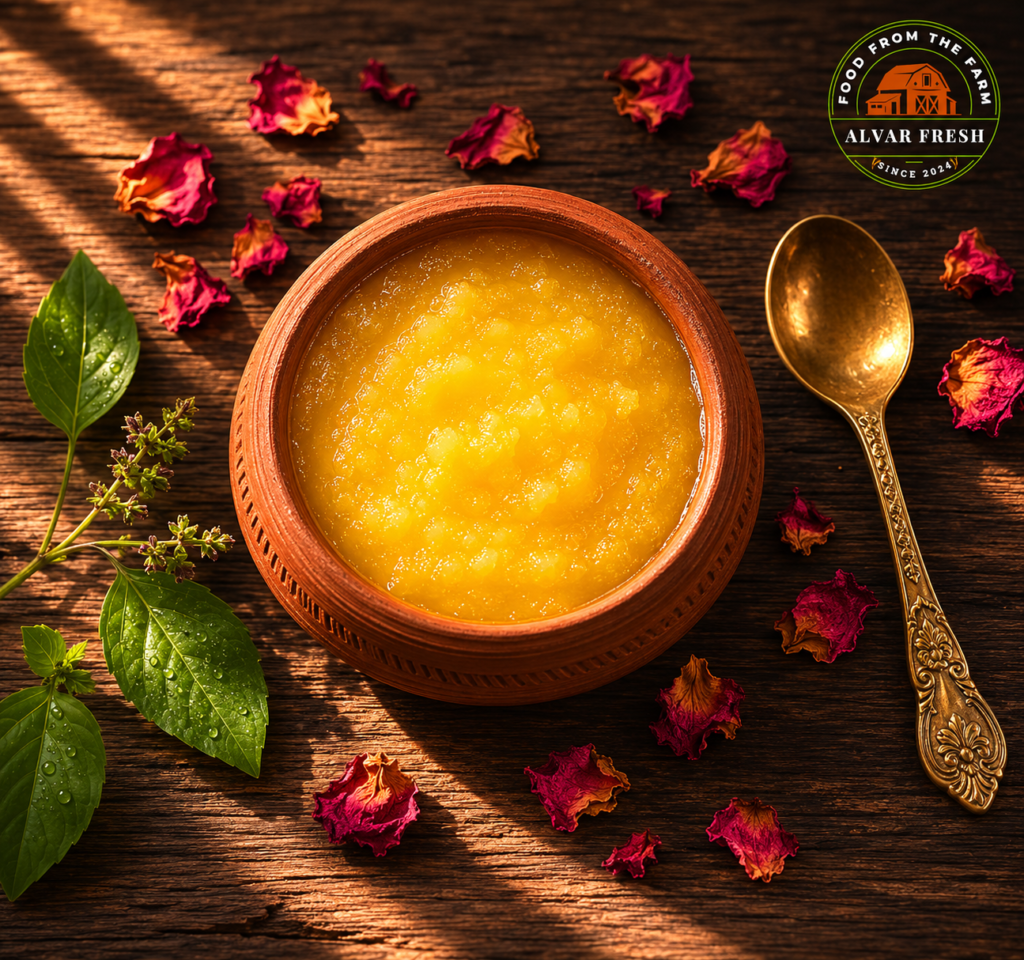
At its core, the a2 cow ghee meaning refers to ghee made exclusively from the milk of cows that produce A2 beta-casein protein — as opposed to A1 beta-casein, which is found in most modern commercial dairy breeds.
Beta-casein is a protein naturally present in cow’s milk. Historically, all cows produced A2 milk. Over centuries of selective breeding — primarily in Western dairy farming — many breeds began producing A1 milk instead. The difference between the two isn’t visible to the naked eye, but it plays out significantly in how your gut processes the milk.
When A1 beta-casein is digested, it releases a peptide called BCM-7 (beta-casomorphin-7). This compound has been associated in several studies with digestive discomfort, bloating, and inflammation. A2 milk, by contrast, doesn’t produce BCM-7 during digestion — which is why many people who feel sluggish or uncomfortable after regular dairy find A2-based products far easier on the system.
So when you’re reading about a2 cow ghee meaning, the protein type in the source milk is the entire foundation.
Explore more: If you want to understand the full distinction between A2 ghee and what’s commonly sold in stores, read our detailed breakdown — What Is A2 Ghee — And Why It’s Not the Same as the Jar Sitting in Your Kitchen Right Now
Which Cows Carry the A2 Gene — And Why Breed Matters
The Breed Question: A1 vs A2
The a2 cow ghee meaning is inseparable from the breed of cow it comes from. Not every cow produces A2 milk by default, and this is where a lot of brands quietly cut corners.
A2-dominant breeds (the ones you want):
- Gir cow — India’s most celebrated indigenous breed, native to Gujarat’s Gir forest region
- Sahiwal — Punjab’s pride, known for rich, high-fat milk
- Rathi — a hardy breed from Rajasthan
- Red Sindhi — another indigenous Indian breed with strong A2 genetics
A1-dominant breeds (what most commercial ghee uses):
- Holstein-Friesian (the black-and-white cows you picture in European dairy farms)
- Jersey (to a lesser extent — some Jerseys carry A2 genetics)
Here’s what makes this important: ghee made from Holstein milk, even if processed well, doesn’t carry the A2 protein profile that defines a2 cow ghee meaning. A brand calling their product “pure ghee” while using crossbred or imported cow milk isn’t lying exactly — but they’re certainly not offering you what a2 cow ghee meaning promises.
Read more: A2 Gir Cow Ghee Benefits: Why This Ancient Breed Produces India’s Finest Ghee
Is A2 Ghee Better Than Normal Ghee?
This is one of the most searched questions around the a2 cow ghee meaning — and the answer is yes, with an important caveat.
Normal ghee (ghee made from A1 cow milk or mixed-breed milk) still offers some benefits — it’s lactose-free, rich in fat-soluble vitamins, and a decent cooking fat. But the a2 cow ghee meaning adds layers that regular ghee simply doesn’t have:
- No BCM-7 peptide release during digestion
- Higher CLA (conjugated linoleic acid) content in many desi breeds
- Better compatibility for those with dairy sensitivity
- The presence of Omega-3 fatty acids in meaningful quantities when cows are grass-fed
Ayurveda has always distinguished between the two, even before modern science gave us the vocabulary. Desi cow ghee — the traditional Indian understanding of a2 cow ghee meaning — was never made from imported or crossbred cattle. It was always the native cow, cared for well, eating natural fodder.
How the Making Process Changes Everything
Recommended products
-
Alvar Fresh Bilona Desi Ghee – 1L
Original price was: ₹1,950.00.₹1,650.00Current price is: ₹1,650.00. -
Alvar Fresh Bilona Desi Ghee – 250 ML
Original price was: ₹699.00.₹450.00Current price is: ₹450.00. -
Alvar Fresh Bilona Desi Ghee – 500 ML
Original price was: ₹1,100.00.₹840.00Current price is: ₹840.00. -
Alvar Fresh Bilona Desi Ghee – 2L
Original price was: ₹3,850.00.₹3,750.00Current price is: ₹3,750.00.
Understanding a2 cow ghee meaning isn’t complete without understanding how the ghee is made. Even if a brand starts with genuine A2 milk, the method of processing determines whether the final product retains its nutrition — or loses most of it.
The Bilona Method and What It Preserves
Traditional ghee in India was never made by boiling cream directly. It followed a multi-step process:
- Fresh A2 milk is cultured into curd (dahi)
- The curd is churned by hand using a wooden churner (bilona)
- White butter (makhan) rises to the surface
- This butter is slow-cooked on low flame until pure ghee separates
This is the Bilona method — and it’s central to the true a2 cow ghee meaning in the Ayurvedic tradition. The slow fermentation and churning process preserves butyric acid, fat-soluble vitamins (A, D, E, K2), and the light, grainy texture that defines hand-churned ghee.
Most commercial ghee — including well-known brands — skips this process entirely. They use cream-separator machines, centrifuges, and direct boiling, which is faster and cheaper but strips away much of what makes a2 cow ghee meaning worth talking about in the first place.
Go deeper: The Bilona Method: The Ancient Ghee-Making Process That Changes Everything (coming soon on Alvar Fresh)
Does Ghee Lower LDL? What the Science Actually Says
One of the most persistent questions around a2 cow ghee meaning is whether it’s heart-healthy — or specifically, whether it raises or lowers LDL (bad cholesterol).
Here’s the honest picture:
Ghee is a saturated fat. Saturated fat in excess does raise LDL in some people. That’s true. But context matters enormously:
- Ghee is rich in butyrate, a short-chain fatty acid that reduces gut inflammation and supports the intestinal lining
- A2 ghee used in moderate quantities as part of a whole-food diet has been observed in several Indian cohort studies to correlate with lower cardiovascular risk compared to refined vegetable oils
- The fatty acid profile of grass-fed desi cow ghee includes Omega-3s and CLA, both of which have documented anti-inflammatory effects
The key phrase here is moderate use. Ghee isn’t a medicine — but it’s also far from the villain it was made out to be during the low-fat diet era of the 1980s and 90s.
Related reading: Is Ghee Good for Health? Here Is What Nobody Is Telling You Honestly
Is Amul Ghee A1 or A2?
Since Amul is the most recognisable ghee brand in India, people naturally ask whether it fits the a2 cow ghee meaning.
Amul sources milk from a cooperative network across India, which includes a mix of indigenous and crossbred cattle. The company does not certify or market their standard ghee as A2. Their processing method is also industrial — cream-separated and machine-processed, not Bilona churned.
That doesn’t make Amul ghee harmful. For a daily cooking fat, it’s functional. But if the a2 cow ghee meaning is what you’re seeking — with genuine indigenous cow sourcing, Bilona processing, and verified A2 protein profiles — Amul’s standard product isn’t it.
📦Experience the A2 Cow Ghee Meaning with Alvar Fresh
Recommended products
-
Alvar Fresh Bilona Desi Ghee – 1L
Original price was: ₹1,950.00.₹1,650.00Current price is: ₹1,650.00. -
Alvar Fresh Bilona Desi Ghee – 250 ML
Original price was: ₹699.00.₹450.00Current price is: ₹450.00. -
Alvar Fresh Bilona Desi Ghee – 500 ML
Original price was: ₹1,100.00.₹840.00Current price is: ₹840.00. -
Alvar Fresh Bilona Desi Ghee – 2L
Original price was: ₹3,850.00.₹3,750.00Current price is: ₹3,750.00.
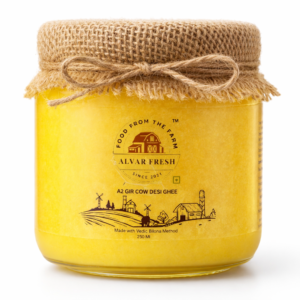
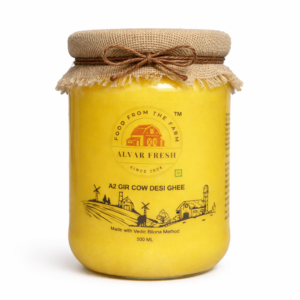
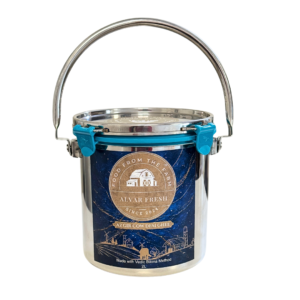
Alvar Fresh A2 Gir Cow Ghee Made from 100% Gir cow milk | Bilona hand-churned | No additives, no shortcuts
Our ghee is made the way it was always meant to be made — small batches, real cows, real process. Every jar carries the full a2 cow ghee meaning: the right breed, the right method, and the nutritional integrity that comes from doing it properly.
[Shop NShopow →] | [Know Our ProcBlogess →]
How to Identify Real A2 Cow Ghee Before Buying
Given how loosely the a2 cow ghee meaning gets used in marketing, knowing what to look for is genuinely useful:
Ask these questions when evaluating any brand:
- Does the label name the breed? Generic “desi cow” without breed specification is vague. Look for Gir, Sahiwal, or Rathi.
- Is the method mentioned? Bilona-churned ghee is produced differently from cream-separated ghee. The method should be stated clearly.
- Is the milk sourcing transparent? Where are the cows? What do they eat? Are they pasture-raised?
- What does the ghee look, smell, and taste like? Authentic a2 cow ghee is grainy in texture (especially in cooler temperatures), golden-yellow in colour, and has a rich, nutty aroma — not bland or white.
Also helpful: The Best Ghee in India: What to Actually Look For Beyond the Label
Conclusion: The A2 Cow Ghee Meaning Is More Than a Label
If you’ve made it this far, you now know that a2 cow ghee meaning isn’t just marketing shorthand. It’s a specific combination of things: the right cow breed carrying A2 beta-casein genetics, the right traditional processing method, and an honest supply chain that doesn’t cut corners between the farm and your kitchen.
It matters because what you eat daily compounds — for better or worse. Choosing ghee that genuinely lives up to the a2 cow ghee meaning means you’re getting a fat that your body recognises, digests well, and benefits from — rather than one that merely looks the part on a shelf.
The a2 cow ghee meaning is a standard. Not every jar meets it. Knowing the difference means you’re never settling for less.
Before you buy: A2 Cow Ghee: What Nobody Actually Tells You Before You Buy and Pure Desi Ghee: How to Identify, Choose & Never Get Fooled Again — both available on the Alvar Fresh blog.